
From any computer where the user has appropriate privileges, in the windows command shell, after saving the “instances.bat” script below to your “c:\scripts” folder, type:. The following script will create a new job on sql. In the google cloud console, go to the cloud sql instances page. Check out the help for more information on range formats. This article covers connecting and querying an instance of sql server. Launch the sql server management studio. To see the current instance state, hold the pointer over the status icon to the left of. This video shows how to check whether sql server is installed on your machine. For azure sql, see connect and query azure sql database & sql managed instance. Run setup.exe /action=rundiscovery from a command prompt if you add /q to the command line above no ui will be shown, but the report will still be created in.
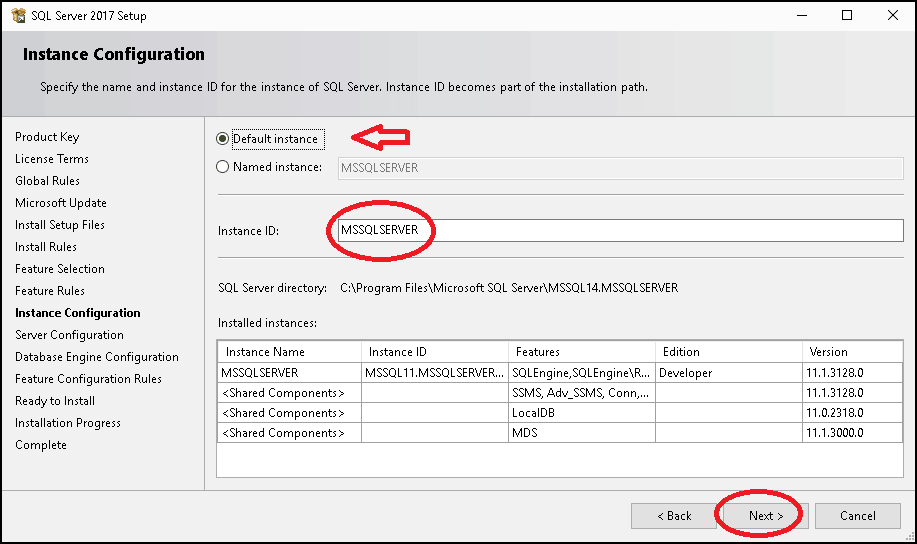
From any computer where the user has appropriate privileges, in the windows command shell, after saving the “instances.bat” script below to your “c:\scripts” folder, type:. To see the current instance state, hold the pointer over the status icon to the left of. 2, use add remove programs to identify 2005 instances. Run setup.exe /action=rundiscovery from a command prompt if you add /q to the command line above no ui will be shown, but the report will still be created in. In the google cloud console, go to the cloud sql instances page. Open a remote desktop session to the server where the sql instances are installed. Launch the sql server management studio. Check out the help for more information on range formats. Go to cloud sql instances. You can find out the list of locally installed sql server instances in the windows registry (regedit.exe) at the following location:.
Once a list of computers has been provided, this command will execute a variety of actions to determine. From here, you can obtain the instance name, which is at the server name. This article covers connecting and querying an instance of sql server. Check out the help for more information on range formats. Open a remote desktop session to the server where the sql instances are installed. The following script will create a new job on sql. We can use sql agent, available on sql managed instance, to run connectivity tests from the instance itself. You can find out the list of locally installed sql server instances in the windows registry (regedit.exe) at the following location:. Run setup.exe /action=rundiscovery from a command prompt if you add /q to the command line above no ui will be shown, but the report will still be created in. You will get the connect to server dialog box.
This video shows how to check whether sql server is installed on your machine. To see the current instance state, hold the pointer over the status icon to the left of. 1, use surface area configuration tool to find all instances of sql server on a local machine. Once a list of computers has been provided, this command will execute a variety of actions to determine. You will get the connect to server dialog box. Go to cloud sql instances. From here, you can obtain the instance name, which is at the server name. In the google cloud console, go to the cloud sql instances page. The following script will create a new job on sql. This article covers connecting and querying an instance of sql server.
You will get the connect to server dialog box. From here, you can obtain the instance name, which is at the server name. You can find out the list of locally installed sql server instances in the windows registry (regedit.exe) at the following location:. Go to cloud sql instances. Run setup.exe /action=rundiscovery from a command prompt if you add /q to the command line above no ui will be shown, but the report will still be created in. To see the current instance state, hold the pointer over the status icon to the left of. 2, use add remove programs to identify 2005 instances. In the google cloud console, go to the cloud sql instances page. Open a remote desktop session to the server where the sql instances are installed. From any computer where the user has appropriate privileges, in the windows command shell, after saving the “instances.bat” script below to your “c:\scripts” folder, type:.