
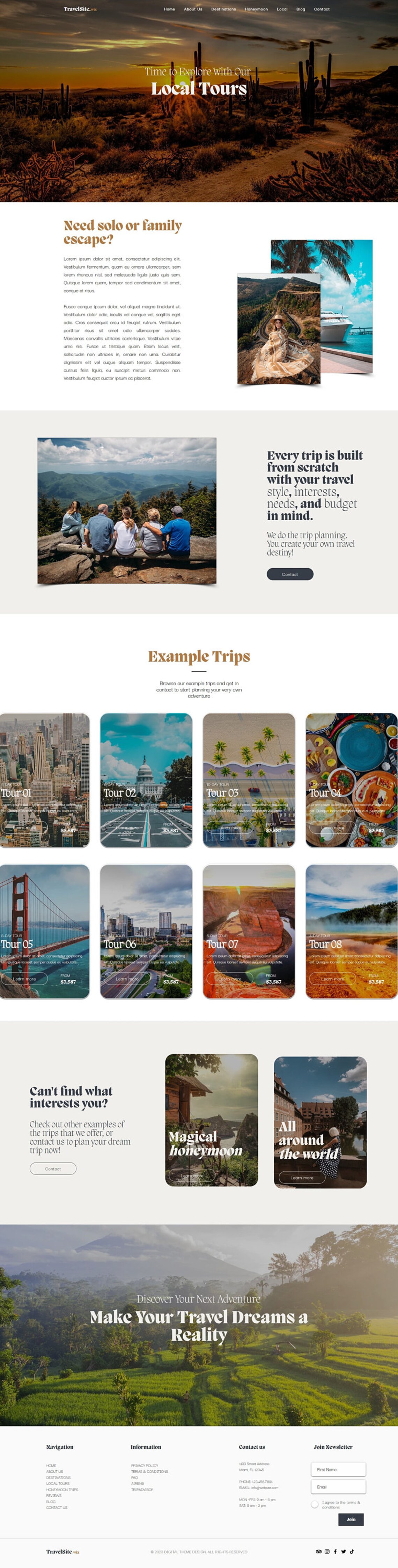
Effective Travel Business Website Blueprint
You’ve got the wanderlust, the killer itineraries, and the passion to share the world with others. But can your website actually sell it? Let’s get real. Building an effective travel business website isn't just about pretty pictures; it's about crafting a digital storefront that converts browsers into booked adventures. I’ve been in the trenches for over a decade, watching businesses soar and others… well, let’s just say they learned valuable lessons. This isn't about chasing trends; it's about building a solid, revenue-generating machine.
The Foundation: Your Digital HQ Strategy
Think of your website as your most important employee. It works 24/7, never calls in sick, and can reach people all over the globe. But if it’s poorly trained, it’s not going to close any deals. So, how do you build an effective travel business website that actually works? It starts with a clear strategy, not just a design. Seriously, don't skip this part. It's the bedrock upon which everything else is built.Defining Your Niche and Audience
Before you even think about colors or fonts, you need to know who you’re talking to and what makes you unique. Are you the go-to for luxury safaris, budget backpacking trips, or niche culinary tours? Your website needs to scream this from the digital rooftops. If you try to be everything to everyone, you'll end up being nothing to anyone. It's a big deal. This means deep dives into your ideal client. What are their pain points? What are their dreams? What kind of language resonates with them? A website tailored to the solo female adventurer seeking off-the-beaten-path experiences will look and sound vastly different from one targeting families wanting all-inclusive resort packages. Understanding this is paramount to how to build an effective travel business website.Crafting Your Unique Value Proposition
What makes your travel business stand out from the thousands of others out there? Is it your exclusive access, your unparalleled customer service, your commitment to sustainable tourism, or your insider knowledge? Your website needs to articulate this clearly and compellingly. This isn't just marketing fluff; it's the core reason someone will choose you. Your unique value proposition (UVP) should be woven into every element of your site, from your homepage headline to your service descriptions. It needs to be concise, memorable, and, most importantly, believable. If you promise an "unforgettable experience," be prepared to deliver precisely that, and then some.
Designing for Conversion: The User Journey
Once the strategy is locked in, it's time to talk about the actual user experience. This is where you guide your visitors, making it effortless for them to find what they’re looking for and, crucially, to book it. A clunky, confusing website is a conversion killer, plain and simple.Intuitive Navigation and User Flow
Look—people are impatient online. They want to find information quickly and easily. This means a clear, logical navigation structure. Think about how a potential client would naturally browse your offerings. They might start with destinations, then look at types of trips, then check pricing, and finally, want to see testimonials. Your site needs to mirror this journey. This is where how to build an effective travel business website really shines. If your menu is a tangled mess, or if key information is buried three clicks deep, you're losing business. I’ve seen so many otherwise great travel companies trip over their own website navigation. Don't be one of them.Compelling Calls to Action (CTAs)
Every page, every section, should have a purpose, and that purpose usually leads to a desired action. Whether it's "Book Now," "Request a Quote," "Download Our Free Guide," or "Contact Us," your calls to action need to be prominent, clear, and enticing. Use action-oriented language. Instead of "More Info," try "Explore Our Itineraries." Instead of "Submit," try "Get Your Custom Trip Plan." And don't be afraid to use contrasting colors for your CTA buttons to make them pop. It’s a small detail, but it makes a massive difference in conversion rates.
Content That Sells: Storytelling and SEO
Your website's content is its voice. It needs to be engaging, informative, and persuasive. This is where you blend your expertise with a touch of magic to inspire wanderlust and build trust.Showcasing Destinations and Experiences
This is your chance to paint a picture. Use high-quality, evocative imagery and video. But don't just show; tell. Describe the sights, sounds, smells, and feelings associated with each destination or tour. What makes this particular experience special? What kind of memories will your clients create? When detailing your offerings, think about the specific benefits. Instead of saying "Visit Machu Picchu," say "Trek the Inca Trail to witness the sunrise over the ancient citadel of Machu Picchu, a journey steeped in history and breathtaking vistas." This is the essence of how to build an effective travel business website that resonates.Integrating SEO for Discoverability
Nobody’s going to book your amazing trips if they can’t find your website. This is where Search Engine Optimization (SEO) comes in. It’s not just about stuffing keywords; it’s about creating valuable content that search engines like Google will rank highly. Naturally weaving in terms like "custom travel planning," "luxury tours," "adventure holidays," and, of course, "effective travel business website" throughout your content, meta descriptions, and image alt text is crucial. Think about what potential clients are actually searching for.
Technical Excellence: Performance and Trust
Beyond aesthetics and content, the underlying technology of your website is critical. A slow, buggy, or insecure site will erode trust faster than you can say "cancellation policy."Mobile Responsiveness and Speed Optimization
Seriously, if your website doesn't look and function flawlessly on a smartphone, you're leaving money on the table. A huge percentage of travel bookings happen on mobile devices. Test your site on various devices and screen sizes. And speed? It's king. If your pages take more than a few seconds to load, visitors will bounce. Optimize images, leverage browser caching, and choose a reliable hosting provider. This is non-negotiable for how to build an effective travel business website.Security and Trust Signals
People are entrusting you with their travel plans and, often, their personal information. Your website needs to inspire confidence. Ensure it has an SSL certificate (HTTPS), clear privacy policies, and visible trust badges (like secure payment icons). Displaying testimonials, awards, and affiliations also builds credibility. If you've got happy clients, let them sing your praises on your site. It’s social proof that’s hard to beat.
Common Questions About how to build an effective travel business website
What are the essential pages for a travel business website?
You'll definitely need a Home page to make a strong first impression, an About Us page to build trust and share your story, a Services or Destinations page to detail your offerings, a Contact page for inquiries, and a Blog for content marketing and SEO. Don't forget a dedicated page for testimonials or reviews!
How important are high-quality images and videos?
They are absolutely critical. Travel is a visual industry. Stunning photography and engaging videos are what will capture your audience's imagination and inspire them to book. Blurry or unprofessional visuals can seriously undermine your credibility.
Should I use a website builder or hire a developer?
It depends on your budget, technical skills, and desired level of customization. Website builders like Squarespace or Wix can be great for beginners and offer templates. However, for a truly unique and highly optimized site, especially for complex functionalities, hiring a professional developer is often the better long-term investment.
How often should I update my website content?
Regular updates are key for SEO and keeping your audience engaged. Aim to add new blog posts, update destination information, and refresh your offerings at least monthly. Even small tweaks can make a difference.
What are some common mistakes to avoid when building a travel website?
Overloading with information, poor navigation, slow loading speeds, lack of mobile responsiveness, and neglecting SEO are major pitfalls. Also, avoid generic stock photos that don't represent your unique brand or destinations.
.